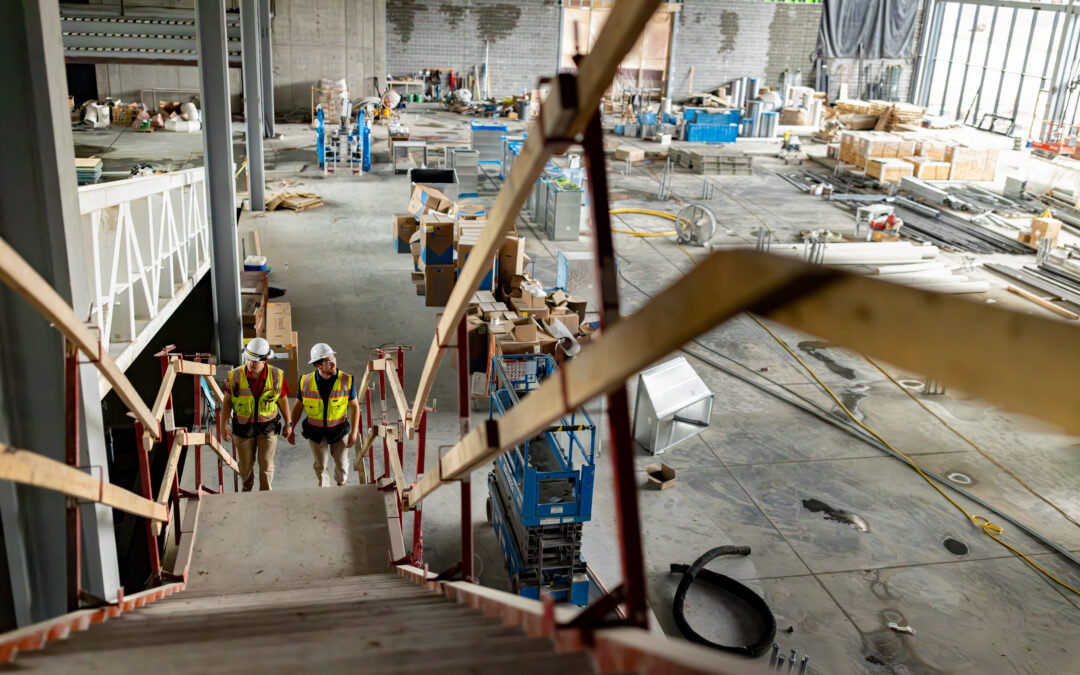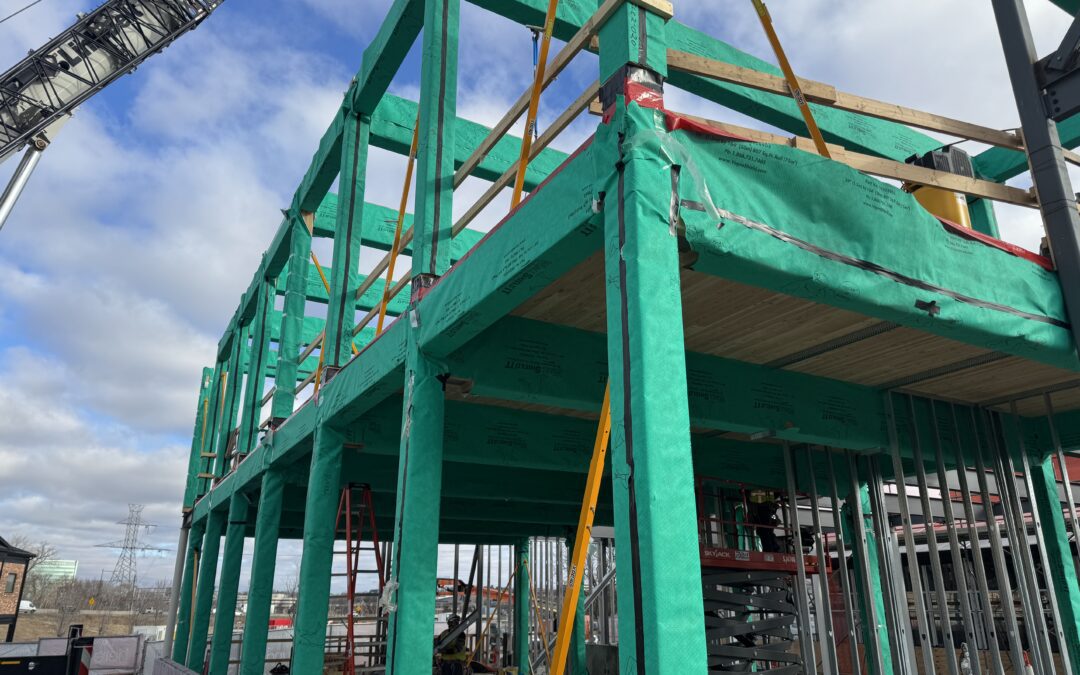
The Osborne Legacy Complex at the University of Nebraska–Lincoln is a nationally recognized, 315,000-square-foot expansion of Memorial Stadium that redefines how the University supports its student-athletes. Designed as a comprehensive, year-round performance and wellness hub, the facility integrates training, medical, academic, and team spaces into one high-performance environment.
But building a project of this scale in the heart of an active stadium introduced a different kind of challenge.
With more than 600 student-athletes, daily campus traffic, and over 90,000 fans cycling through the site on game days, construction had to proceed safely within one of the most visible and high-traffic environments in college athletics.
Hausmann delivered full CMAR services from preconstruction through turnover, completing the project in August 2024. It is truly a transformative facility, but it’s also a case study in how proactive planning can maintain exceptional safety performance under constant public exposure and operational pressure.
A Different Kind of Jobsite: Setting the Standard
Safety on the Osborne Legacy Complex was a defining element of project success. Rather than relying on standard protocols, the team built a dynamic safety framework that adapted to changing risks—particularly those associated with public interface, constrained logistics, and long-duration temporary structures. This included:
- Dedicated onsite safety leadership
- Real-time observation tracking through Procore
- Continuous pre-task planning and daily coordination
- Ongoing safety training tailored to evolving site conditions
With more than 1.2 million work hours logged and peak manpower exceeding 200 tradespeople, Hausmann’s proactive, project-specific safety program addressed the realities of building within an active, high-profile campus environment.
Working in the Public Eye: Live Stadium Conditions
One of the project’s most complex challenges was maintaining safe operations adjacent to Memorial Stadium during three football seasons, a world-record-breaking women’s volleyball event, and a major concert.
When construction activities rendered a main gate inaccessible, Hausmann partnered with university officials, fire marshals, and scaffold engineers to design and install a 30-foot-tall temporary emergency egress system, including an ADA-compliant ramp. To ensure reliability under real-world conditions:
- Weekly “Game Day Readiness” inspections were conducted with campus EH&S teams
- Scaffold monitors and crane attendants were stationed onsite during events
- All systems were reviewed for life safety compliance and crowd movement
This approach ensured safe passage for more than 90,000 fans per event—without disruption or incident—while construction continued just feet away.
Managing Risk in Constrained Environments
The site’s physical constraints introduced another layer of complexity, since all materials and equipment were routed through a 16-foot-wide alley shared with student-athlete circulation between facilities. To manage this risk, the team implemented:
- Strict delivery scheduling and traffic coordination
- Clearly defined pedestrian pathways
- Daily logistics planning meetings
- Full-time onsite safety oversight
These measures ensured safe, continuous movement for both workers and the campus community, turning a high-risk condition into a controlled, repeatable process.
Training, Preparedness, and Team Alignment
Preparation played a critical role in the project’s safety performance. Hausmann conducted quarterly, sitewide emergency response trainings in partnership with the City of Lincoln, including:
- Crane rescue scenarios
- Confined space entry
- Fire response coordination
- Emergency egress planning
These exercises aligned field crews, safety personnel, and first responders. Performance was consistent, demonstrating that safety was embedded in the culture, not dependent on individuals.
Results: Safety as a Measurable Outcome
The results reflect a disciplined, high-performance approach to safety:
- 1.2 million+ work hours completed
- 200+ workers onsite at peak
- 1,500+ tradespeople engaged throughout the project
- Zero OSHA violations
More importantly, the project maintained continuous safe operations during major public events, full life safety compliance in an active stadium environment, and injury-free outcomes on high-risk work activities.
The Hausmann Difference
On the Osborne Legacy Complex, safety was a fully integrated part of planning, logistics, and execution. Hausmann delivered a project that was not only complex and high-profile—but also consistently safe under pressure. It set a new benchmark for construction in live campus environments, demonstrating what’s possible.